6th Grade Back to School Math Craft
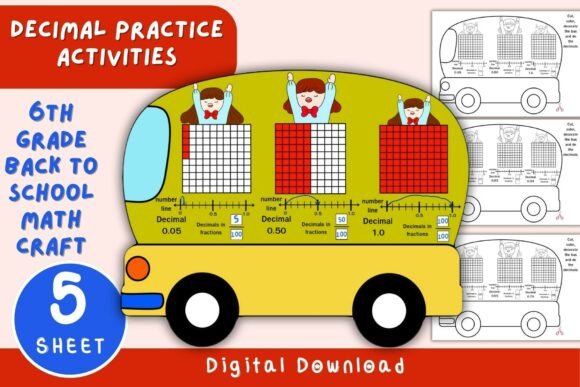
As the new school year begins, teachers and students alike are eager to dive into fresh learning experiences. One exciting way to kick off the year is with the 6th Grade Back to School Math Craft, a hands-on activity that combines creativity with essential math skills. This craft not only helps students review decimals and place value but also serves as a fun classroom decoration. By integrating math into an engaging project, educators can make the first week of school both educational and enjoyable.
The 6th Grade Back to School Math Craft is designed to reinforce decimal operations while allowing students to express their creativity. Whether it's creating a personalized number line, designing a decimal-themed poster, or building a 3D model of decimal places, this activity ensures that math remains relevant and accessible. It’s an excellent opportunity for students to practice what they’ve learned over the summer in a meaningful context.
Why the 6th Grade Back to School Math Craft Works
Many educators may overlook the importance of incorporating hands-on activities into the beginning of the school year. However, research shows that kinesthetic learning—learning through movement and touch—can significantly improve retention and understanding. The Back to School Math Craft capitalizes on this by turning abstract concepts like decimals into tangible, visual representations.
Another benefit of this approach is its ability to engage students who might otherwise feel intimidated by math. When students see themselves in the work they're creating, they become more invested in the learning process. For example, a student who creates a personalized decimal chart can take pride in their work, which in turn boosts confidence and motivation.
Common Mistakes and How to Avoid Them
While the 6th Grade Back to School Math Craft offers many benefits, there are some common pitfalls that teachers should be aware of. One mistake is choosing a craft that doesn’t align with the curriculum goals. If the activity focuses too much on art and not enough on math, students may miss out on the key learning objectives.
To avoid this, teachers should ensure that the craft includes clear math components. For instance, when creating a decimal place value poster, students should be required to label each section with the correct place value and perform simple operations like addition or subtraction with decimals.
A second common mistake is not providing enough guidance or structure. While creativity is important, students need direction to stay on task. Teachers should provide step-by-step instructions and examples to help students understand what is expected. This can be done through a short demonstration or by offering templates that students can customize.
Finally, some educators may forget to incorporate assessment into the activity. Even though the craft is fun, it should still serve as a teaching tool. Teachers can assess students’ understanding by reviewing their work or having them explain their process. This ensures that the activity is not just a one-time event but a valuable learning experience.
Practical Tips for Success
Before starting the 6th Grade Back to School Math Craft, teachers should consider several factors to ensure a smooth and effective experience. First, it’s important to choose materials that are easy to work with and safe for students to handle. Using paper, markers, and glue is typically a good choice, as these items are readily available and pose minimal risk.
Teachers should also think about how the finished products will be used. Will they be displayed in the classroom? Shared with parents? Or used as a reference tool throughout the year? Knowing the purpose of the craft can help guide the design and content of the activity.
Additionally, teachers should be prepared to offer support and encouragement throughout the process. Some students may struggle with the math concepts or find the craft challenging. By being patient and providing individualized assistance, teachers can help all students succeed.
Real-World Examples and Better Approaches
Let’s say a teacher wants to create a decimal place value poster. A common mistake might be to allow students to focus solely on the artistic elements without reinforcing the math behind it. Instead, the teacher could require students to include specific decimal numbers and demonstrate how they relate to each other.
For example, students could create a large number line that spans from 0 to 1, marking each tenth and hundredth. They could then use colored pencils to highlight different decimal values and write explanations next to each one. This approach ensures that students are actively using their math skills while also expressing their creativity.
Another example involves using a 3D model to represent decimal places. Students could build a tower where each level represents a different place value (tenths, hundredths, thousandths), and they could use small objects to represent decimal amounts. This tactile experience can help students better understand the concept of place value in decimals.
By combining math instruction with creative expression, teachers can create a learning environment that is both engaging and effective. The 6th Grade Back to School Math Craft is a perfect example of how education can be made fun without sacrificing academic rigor.
Final Thoughts
The 6th Grade Back to School Math Craft is more than just a fun activity—it’s a powerful tool for reinforcing essential math concepts. By carefully planning the activity, avoiding common mistakes, and focusing on both creativity and learning, teachers can set the tone for a successful school year. Whether students are working on decimal operations, place value, or anything else, this craft provides a unique and memorable way to start the journey ahead.